

IT Financial Management (ITFM) consulting
Understanding, Controlling, Shaping IT Costs and Business Value
IT is under pressure: it has to do more but cost less. There is often a lack of traceability of investments and business benefits. Vendor lock-ins or inflation reduce the room for maneuver. Find out how you can break this vicious circle and sustainably prove the added value of your IT.











“We started the project well prepared with TBM and were immediately confident that we could work with the ITFM consultants from Strategic Service Consulting. From the outset, the direction of our ITFM journey was clear and Serviceware delivered a standard that was both practical and easy to implement.”
Lisa Addimilio
IS Manager Planning & Controlling at Aptar Group


“ITFM consulting from Serviceware is a unique addition to the software solution. The experience of the strategic ITFM consultants in implementing our cost model in the tool has significantly accelerated the implementation. They also provided us with strategic support in answering relevant questions on cost control and reduction with the tool and, above all, beyond the tool, in particular with the help of an IT cost benchmark at TBM Tower and service level. A measurable added value.”
Senior Manager IT Accounting at Global industrial manufacturing company based in southern Germany
“The degree of strategic precision and at the same time technical depth with which the ITFM consultants from Serviceware picked up both the management level and the executive teams in IT and controlling is unparalleled on the market. Pilot results, blueprints and plans for follow-up activities in our ITFM journey could be directly used and implemented operationally.”
Vice President, Strategy, Architecture and Innovation at International manufacturer of machinery and industrial goods for the agricultural sector
IT Financial Management - The right partner at your side

Dr. Daniel Stock
Partner Strategic Service Consulting

26:04
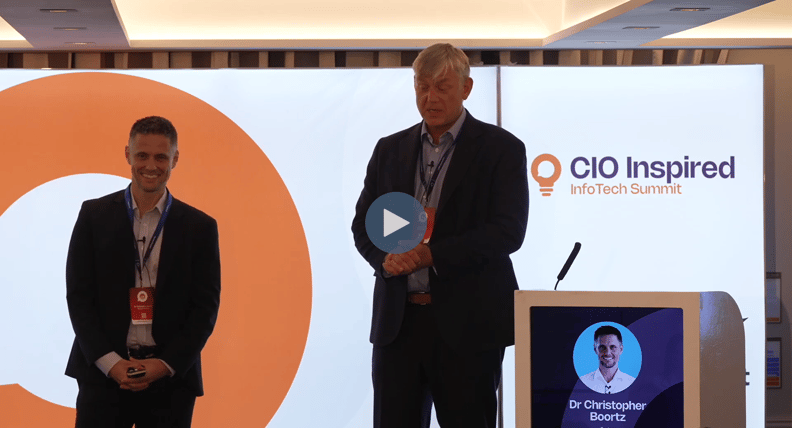
Masterclass IT Financial Management
IT budgets are constantly being questioned. The tensions can be resolved by closely linking technology investments to business objectives. This masterclass shows how IT Financial Management (ITFM), TBM and FinOps practices can help transform IT from a cost center to a strategic value driver.
Key Takeaways:
-
How organizations are overcoming challenges such as siloed data and operational complexity to create complete transparency, optimize costs and enable more agile, data-driven decisions.
-
Complete and transparent determination of the total cost of ownership (TCO)
-
Practical examples of rapid ROI through ITFM
-
The role of ITFM and FinOps in collaboration and value creation
-
Strategies to promote financial transparency and accountability in IT

Experience IT cost benchmarking in practice


Frequently Asked Questions
IT Financial Management (ITFM) is the discipline of planning, budgeting, allocating, and controlling IT costs (Opex and Capex) to ensure cost transparency and measurable business value.
ITFM helps organizations understand where IT money is spent — across services, applications, projects, business units, and cloud environments — and enables data-driven decisions to improve efficiency and optimize IT investments.
Modern IT Financial Management practices often build on established frameworks such as Technology Business Management (TBM) and FinOps (Financial Operations) — in cloud-centric environments.
IT Financial Management (ITFM) creates business value by increasing cost transparency, optimizing IT spending, and enabling better investment decisions.
By allocating IT costs to services, applications, projects, and business units, ITFM makes IT expenses understandable and controllable. This transparency helps organizations identify optimization potential, eliminate unnecessary costs, avoid future overspending, and align IT investments with business priorities.
Using methods such as cost allocation, benchmarking, budgeting, and financial planning, ITFM strengthens collaboration between IT and business stakeholders. As a result, companies improve efficiency, enhance governance, and ensure that IT delivers measurable value to the organization.
Technology Business Management (TBM) is a management framework that helps organizations manage IT costs, consumption, and performance in a business-oriented way. It provides a standardized taxonomy to structure IT spending and link it to business services and value creation.
At the core of TBM are defined cost pools (e.g., labor, software, hardware) and Technology Resource Towers (such as compute, storage, network, or end-user services). These structures create transparency across the IT cost base and enable consistent internal reporting as well as cross-company benchmarking.
The TBM framework is developed and maintained by the TBM Council and is continuously enhanced to reflect evolving technology and cloud operating models.
FinOps (Financial Operations) is a cloud financial management discipline and operating model that helps organizations manage, optimize, and govern cloud spending. It combines financial accountability, engineering practices, and governance processes to ensure that cloud costs are transparent, controlled, and aligned with business value.
The FinOps Foundation describes principles, roles, and processes for managing and optimizing cloud costs. FinOps is primarily considered an operational discipline and cultural practice rather than just a structural model.
FinOps complements IT Financial Management (ITFM) and Technology Business Management (TBM). While ITFM takes a holistic view of all IT costs and TBM provides a standardized management framework and taxonomy for enterprise-wide technology transparency, FinOps focuses on the dynamic nature of cloud cost management.
Cloud+ refers to the extension of FinOps principles beyond pure public cloud environments.
Some organizations informally use terms such as “FinOps on Premises” to describe this extended scope.
Value Engineering is a structured approach to improving the relationship between cost, performance, and business value. In the context of IT Financial Management (ITFM), it focuses on identifying and realizing optimization potential within the IT cost base.
The objective is not only to reduce costs, but to maximize value by aligning IT spending with business requirements and performance expectations.
A typical Value Engineering cycle includes:
- Identification of optimization potential
Using benchmarking, cost transparency, and comparative analysis, potential improvement areas are identified and prioritized. - Validation and business case development
Improvement hypotheses are analyzed in detail and translated into concrete project proposals with measurable financial and operational benefits. - Implementation and benefit tracking
Approved initiatives are implemented, and the realized savings and value contributions are systematically monitored.
This cycle is repeated on an ongoing basis to ensure continuous cost optimization, efficiency improvement, and sustainable value creation across the IT organization.
IT Financial Management (ITFM) covers the core financial processes required to plan, allocate, control, and optimize IT spending across the organization.
Key ITFM processes include:
- Planning and budgeting
Establishingbudgets based on business demand, cost structures, and strategic priorities. - Cost allocation, showback, and chargeback
Transparent allocation of IT costs to services, applications, projects, or business units. Showback creates cost transparency, while chargeback enables internal billing. True-up mechanisms ensure alignment between planned and actual costs. - Forecasting
Continuous projection of IT spending based on actual consumption and evolving demand. - Reporting and cost transparency
Standardized financial reporting that provides insight into IT cost drivers, trends, and deviations. - Performance management and benchmarking
Measurement and comparison of IT costs and performance to identify optimization potential and improve value contribution.
Together, these processes form the foundation of effective IT financial governance.
The Digital Value Model (DVM®) is Serviceware’s proprietary model for implementing IT Financial Management (ITFM) in a pragmatic and scalable way. It enables CIOs, CFOs, and IT leaders to assess the business value of IT services and investments using standardized, data-driven methods.
DVM operationalizes Technology Business Management (TBM) and integrates FinOps capabilities to provide a comprehensive view of IT services, including people, processes, and data. It supports planning and budgeting, forecasting, cost allocation, cost transparency, benchmarking, scenario analysis, cloud cost management, and related governance use cases such as vendor management and sustainability reporting.
By combining a structured data model with practical best practices, DVM bridges operational cost control and strategic decision support within a unified ITFM approach.
Challenges in ITFM projects often arise right from the start due to a lack of a target image, which makes a reliable business case impossible. In addition, long implementation cycles block the realization of benefits and risk acceptance and sponsorship. Waiting for perfect data also often means that real improvements become visible too late. Solution: define clear and measurable success targets in advance. Proceed iteratively, in milestones that realize measurable improvements. And make sure that you work with the data at an early stage in order to quickly identify and leverage initial cost potential.