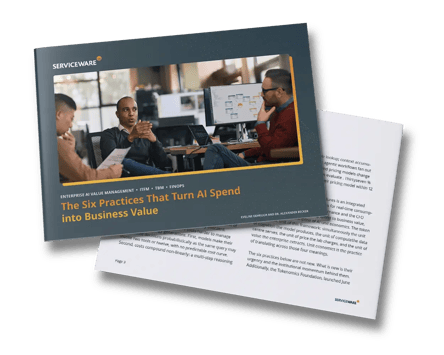
Traditional technology cost models were not designed for AI consumption that can change with model choice, token volume, context depth, agent behavior, and vendor pricing. This whitepaper explains how FinOps, IT Financial Management (ITFM), and Technology Business Management (TBM) can work together to give leaders a clearer view of AI costs and the outcomes they support.
What you’ll learn
- Build meaningful AI unit economics
Move beyond tracking tokens and model costs. Learn how to connect AI consumption to units the business understands, from cost per application interaction to cost per customer outcome.
- Make AI costs accountable to the teams driving them
Explore how AI showback and chargeback can translate technical consumption into business activities that product owners, process managers, and budget holders can understand and influence.
- Forecast what happens when AI use cases scale
See how driver-based modeling and dynamic forecasting account for token volume, model calls, agent activity, context depth, and other factors that can change the cost of an AI workload.
- Make better AI portfolio decisions
Learn how consumption data, scenario planning, and business-outcome metrics can help leaders decide which AI initiatives to scale, optimize, pause, or reassess as costs and assumptions change.
See where your organization stands
The guide also includes a three-stage AI value management maturity model, from basic spend visibility to full attribution, dynamic forecasting, and business-outcome unit economics, plus 10 diagnostic questions to help FinOps, IT Finance, TBM, and business leaders identify where to focus next.